
Gum Disease Treatment – New Lenox
Stop Gum Disease In Its Tracks
Periodontal disease (also referred to as gum disease) is the leading cause of tooth loss among American adults, as well as one of the most common health problems throughout the world. This infection may seem relatively harmless in the beginning stages, but receiving treatment early is absolutely vital if you want to protect your smile from lasting damage. At Atrium Family Dental of New Lenox, Dr. Albert, Dr. Stylski, and Dr. Snow offer several non-invasive gum disease treatment options for banishing dangerous bacteria and revitalizing oral health. Have you noticed any bleeding in your saliva after flossing? Does your gum tissue seem overly red or swollen? Please don’t wait – contact our New Lenox, IL dental office today to schedule a checkup.
Why Choose Us for Periodontal Therapy?
- State-of-the-Art Soft Tissue Laser
- Highly Experienced & Compassionate Dentists
- Extended Morning & Evening Office Hours
Scaling & Root Planing

Scaling and root planing is essentially a professional cleaning that has been elevated to the next level. Our hygienists will perform treatment in two distinct segments, starting with the thorough elimination of plaque and tartar from around and underneath the natural gum line. Once this is complete, any rough spots along the tooth root surfaces will be gradually smoothed down as well to prevent further bacterial buildup. Depending on the severity of the patient’s symptoms, this treatment may require multiple appointments to successfully complete here in New Lenox.
Do You Need Scaling & Root Planing?
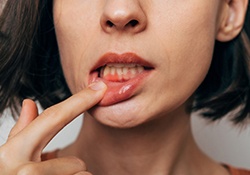
To determine whether or not scaling and root planing is ideal for you, we will start by examining your gums. X-rays are also captured to collect as much information as possible. Depending on the condition of your gum tissue, the depth of the pockets, and the progression of your gum disease, we may recommend scaling and root planing to keep the condition at bay.
The Process of Scaling & Root Planing
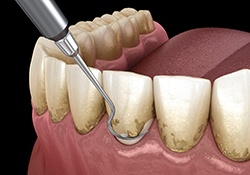
The complete scaling and root planing process is usually completed over the course of two appointments, but this can vary from patient to patient. To remove plaque and tartar, we will start by scaling the teeth with dental tools. We will target the gumline and beneath the gumline where plaque, tartar, and bacteria build up.
After the scaling portion is complete, we will move on to the root planing portion of the treatment. This is when we smooth down sections of the teeth beneath the gumline. This helps the gums to adhere to the teeth, speeding up the healing process by making it more difficult for bacteria to build up in the future.
Aftercare Tips for Scaling & Root Planing
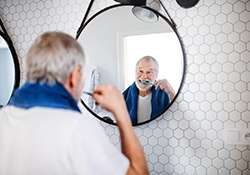
It is normal for the gums to feel a little bit sore after scaling and root planing. There may also be some inflammation in those areas. This is temporary and should subside over the next couple of weeks. Here are some tips to help the healing process go quickly and smoothly.
- Brush twice per day with a soft-bristled toothbrush and fluoridated toothpaste
- Rinse your mouth with saltwater after meals
- Floss daily
- Stick to a soft diet following your treatment
- Avoid foods and beverages that are spicy, acidic, or hot
- Refrain from intense physical activity
Antibiotic Therapy
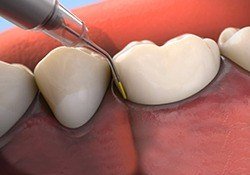
Antibiotic therapy can often be an excellent supplement to scaling and root planing or soft tissue laser therapy. The medication will be directly placed in specific sites throughout the mouth, eliminating remaining bacteria over a period of days or weeks following the initial treatment. Studies have found that antibiotics can reduce the size of deep periodontal pockets, helping many patients avoid more invasive treatment down the road.
Laser Periodontal Treatment
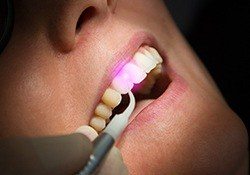
In order to enhance the care that we’re able to offer our patients, our team has made a point of incorporating the latest technology into our practice. As such, we’re proud to be able to offer laser periodontal treatment for individuals with gum disease. When performed in conjunction with scaling and root planing, laser periodontal treatment can significantly reduce inflammation and help prevent the infection in your gums from growing worse.
How Laser Periodontal Treatment Works
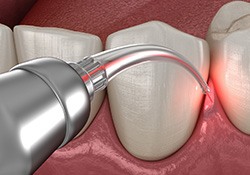
During laser periodontal treatment, our team uses our state-of-the-art Waterlase hard and soft tissue laser to gently remove gum tissue that has been severely damaged as a result of gum disease. Removing the infected tissue makes it easier for the remaining healthy tissue to heal and reattach to the teeth. Additionally, the laser can be used to kill harmful bacteria, which aids the body in fighting the infection.
The Benefits of Laser Periodontal Treatment

Laser periodontal treatment is an alternative to traditional gum surgery. Choosing this form of gum disease treatment in New Lenox lets you enjoy the following benefits.
- Improved Comfort: Using a laser instead of a scalpel allows for a less invasive, more comfortable treatment.
- Precision: By using a dental laser, your dentist can precisely target the areas of your mouth that have been affected by gum disease while leaving healthy tissue alone.
- Less Bleeding: Procedures performed with a dental laser tend to result in less bleeding. This is because the energy from the laser can immediately seal exposed blood vessels.
- Reduced Healing Time: It generally takes patients less time to heal after laser periodontal treatment compared to traditional gum surgery.
- Reduced Risk of Infection: Since the laser kills bacteria and cauterizes blood vessels, it can ultimately lower the risk of an infection occurring after the treatment.
Aftercare Tips for Laser Periodontal Treatment

It typically takes around a week for the mouth to completely heal after laser periodontal treatment. During this time, you may notice some mild swelling and sensitivity in your gums. You can typically keep your discomfort under control by taking an over-the-counter painkiller.
Throughout the recovery process, you will need to keep your mouth as clean as possible. You can do so by rinsing with salt water multiple times a day. You can also continue to brush and floss as you normally would, but you will need to stay away from the treated area until it has sufficiently healed.
Our team will recommend that you stay away from certain foods for a while following your laser gum treatment. In particular, you should plan to avoid anything that’s hot, cold, or spicy.
Any post-treatment discomfort should gradually fade over time. If it seems to grow worse instead, be sure to let our team know immediately.